
Stop Maxxing. Start Nourishing.
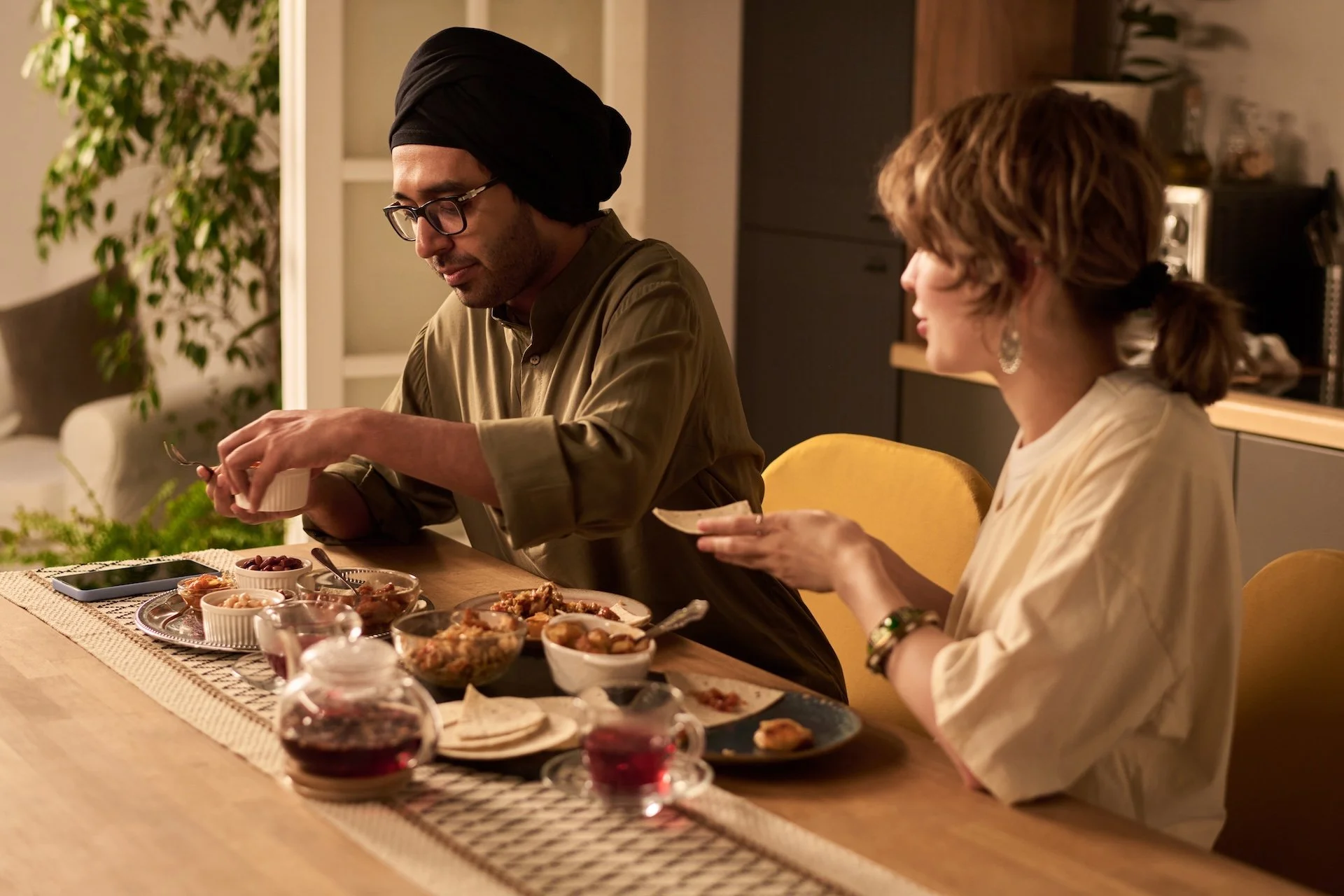
Couple sharing a meal
A Chinese medicine view on health, longevity, and your own constitution
Scroll for five minutes, and someone will be selling you a better version of your face. Looksmaxxing started on fringe forums with teenage boys “mewing” their tongues to reshape their jaws and tapping their cheekbones with hammers. It has since gone mainstream and spread to everything else. Sleepmaxxing. Proteinmaxxing. Mouth tape, cold plunges, a supplement stack in a pill organizer the size of a tackle box, and a wearable to grade how well you slept. Tech millionaires post their blood panels and call their protocols a path to living forever.
I completely relate to this. The world feels like it’s on fire; the antidote might be as simple as a comforting morning routine. I know it’s not that simple. Getting kids off to school is hardly relaxing.
But lately a certain type of patient keeps walking into my office. She has the ring that scores her sleep, the green powder, the cold plunge in the garage. She hasn’t eaten a warm breakfast in two years. Her hands are ice, her gut is a mess, and she’s awake at 3 a.m. wondering why none of it is working. Forty-three years in, I’ve learned to recognize her in about five minutes.
The problem with maxxing is the premise. It treats the body like a machine to be pushed toward one number, whether that’s the jawline, the scale, the HRV score, or the biological-age estimate. Chinese medicine starts from the opposite premise. You aren’t a machine to be maximized. You’re a living system to be kept in balance, and what counts as balance depends on who you are.
Health is not a body size.
I’ve never cared much about the scale, and I care about it even less now. Chasing a number can tip people into disordered eating, and weight stigma itself does measurable harm to health.[1] The scale also ignores the fact that different cultures and bodies have very different ideas of health and beauty. And it doesn’t tell you much. One large U.S. analysis found that tens of millions of adults classified as “overweight” or “obese” by BMI were metabolically healthy, while millions in the “normal” range were not.[2]
That mirrors what I see in my practice: thin patients who are depleted and unwell, and large-bodied patients who are strong, warm, well-rested, and robust. Your pulse, your tongue, your sleep, your digestion, your energy at 3 p.m., and whether your periods or your moods swing wildly tell me far more than your weight does.
So the question isn’t how to lose something. It’s how to gain health, and that starts with understanding your constitution.
Your constitution: why one protocol doesn’t fit everyone
In Chinese medicine, constitution (tǐzhì, 體質) is your baseline terrain: the tendencies you were born with plus what decades of living have layered on top. Chinese medicine commonly describes nine types, including balanced, qi-deficient, yang-deficient, yin-deficient, phlegm-damp, damp-heat, blood stasis, and qi-stagnant.[3] Most of us are a blend.
This is exactly where one-size-fits-all maxxing falls apart. A few examples I see all the time:
The yang-deficient person (always cold, pale, tired, loose stools, craves warmth) who has started cold plunging every morning because a podcast told them to. They’re using up heat they don’t have.
The yin-deficient person (runs hot at night, dry skin and eyes, night sweats, a mind that won’t switch off) who does hot yoga, intermittent fasting, and three espressos. That’s more fire under a pot that’s already boiling dry.
The phlegm-damp person (heavy, foggy, sluggish, bloated, prone to weight gain) lives on iced green smoothies and big salads. Cold, raw, and wet is the last thing a damp system needs.
The qi-stagnant person (tense, irritable, tight shoulders, PMS, sighs a lot) is white-knuckling a rigid protocol. The rigidity itself is the problem.
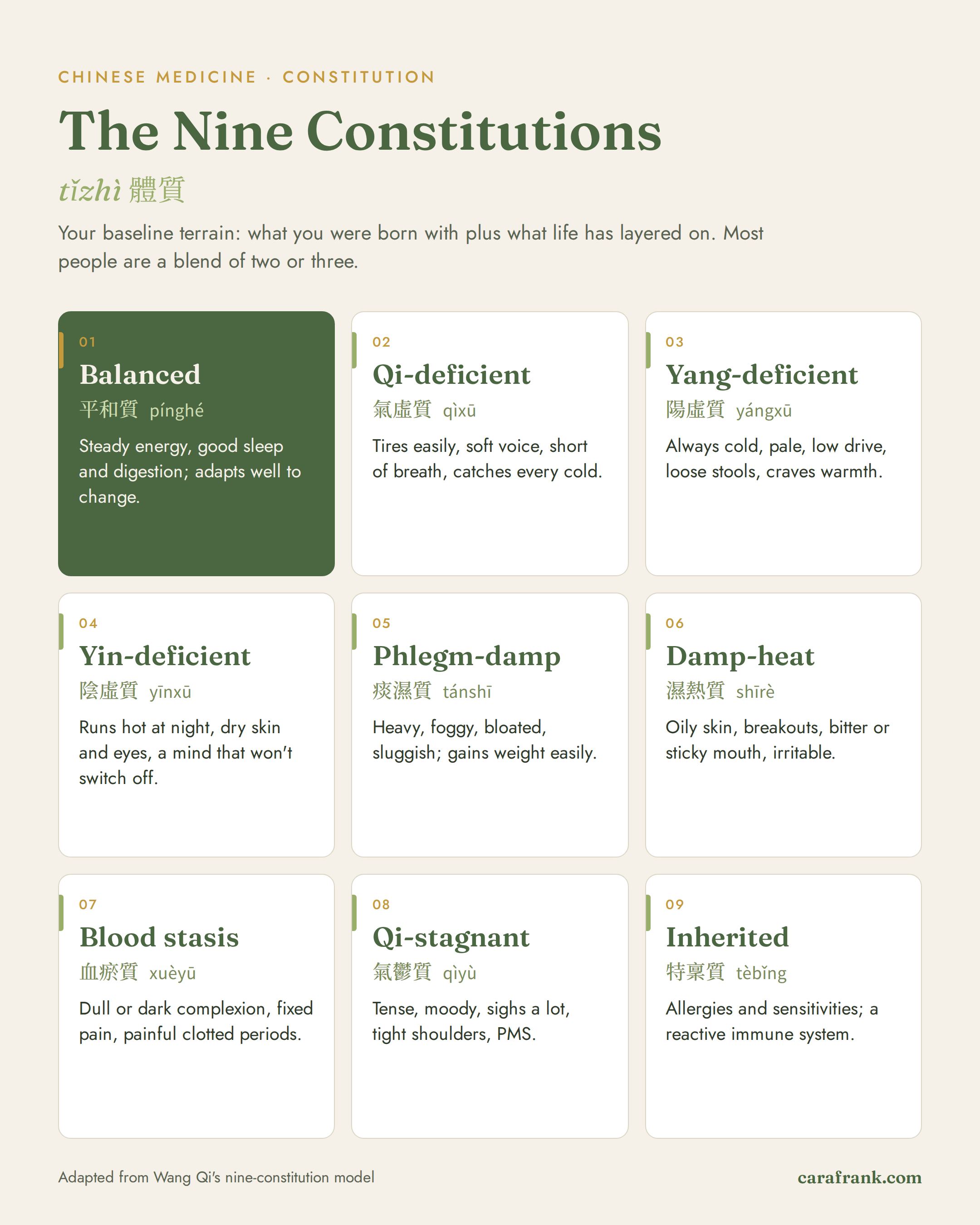
Nine Constitutional Types. You’re likely a mix of a few/
Same “healthy” habit, very different outcome. That’s why a good practitioner asks who you are before telling you what to do.
What the classics actually say about longevity
The Chinese tradition has been thinking about longevity for more than two thousand years. The practice is called yǎngshēng (養生), “nourishing life,” and the advice is humbling in how unglamorous it is. The first chapter of the Huangdi Neijing describes people who lived to a hundred with their vigor intact. Their secret: they were moderate in eating and drinking, kept regular hours, and didn’t exhaust themselves recklessly (食飲有節,起居有常,不妄作勞).[4]
That’s it. There’s no hack in there. Longevity in this tradition comes from not wasting what you have. Protecting digestion (the source of qi and blood), protecting sleep (when yin and blood are restored), and not burning through your reserves matters more than adding another product.
Stress is part of the picture.
Chronic stress keeps cortisol elevated, and women who secrete more cortisol under stress tend to carry more fat around the abdomen.[5] Stress also wrecks sleep and drives cravings. In Chinese medicine terms, that’s Liver qi overacting on the Spleen and Stomach. For many of my patients, the stress isn’t just a busy calendar. It’s years of an overloaded nervous system, sometimes old trauma the body is still bracing against. A punishing optimization regimen piles more demand onto a system that’s already on high alert, and it can work against the very thing it’s trying to fix.
Five easy ways to gain health (no maxxing required)
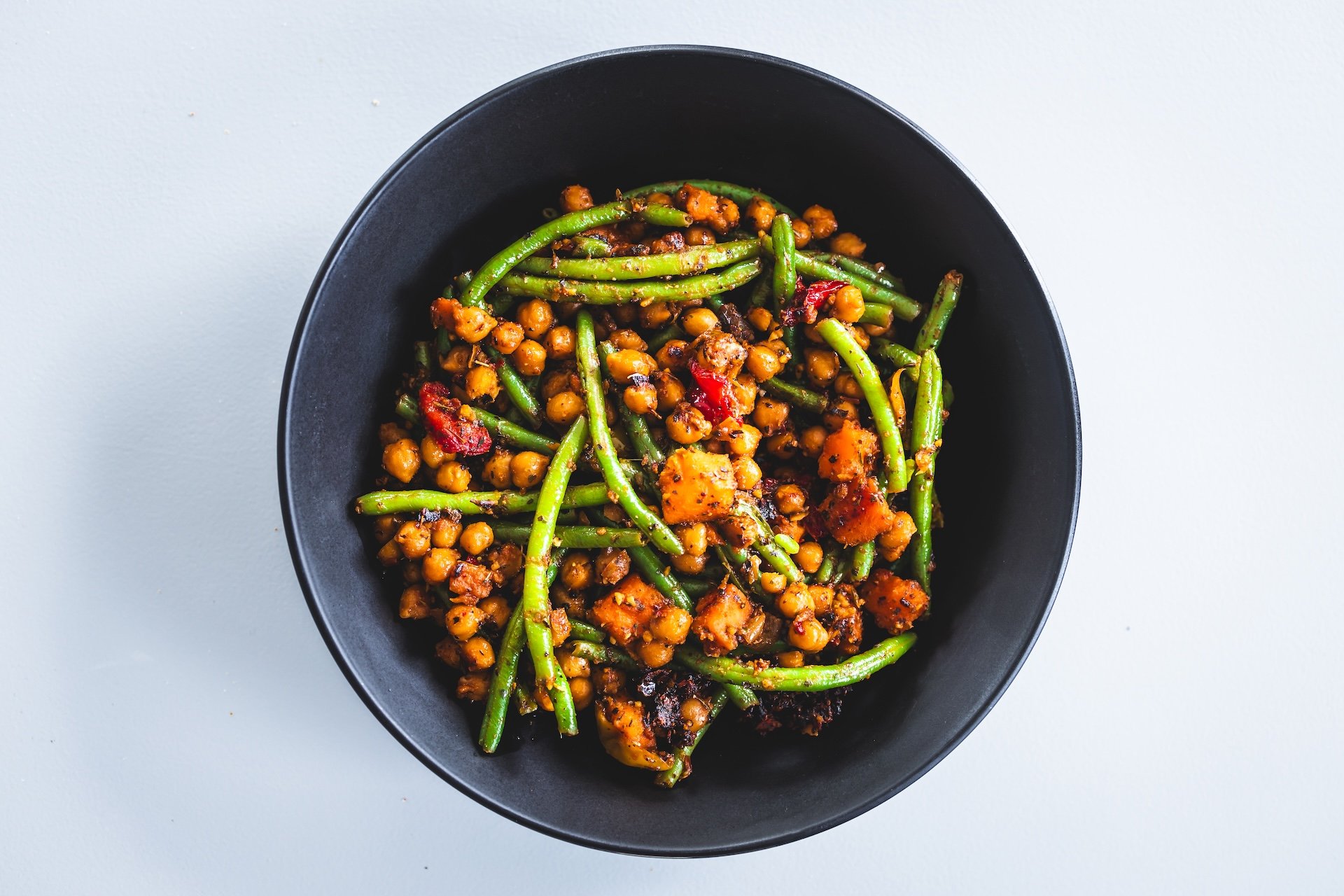
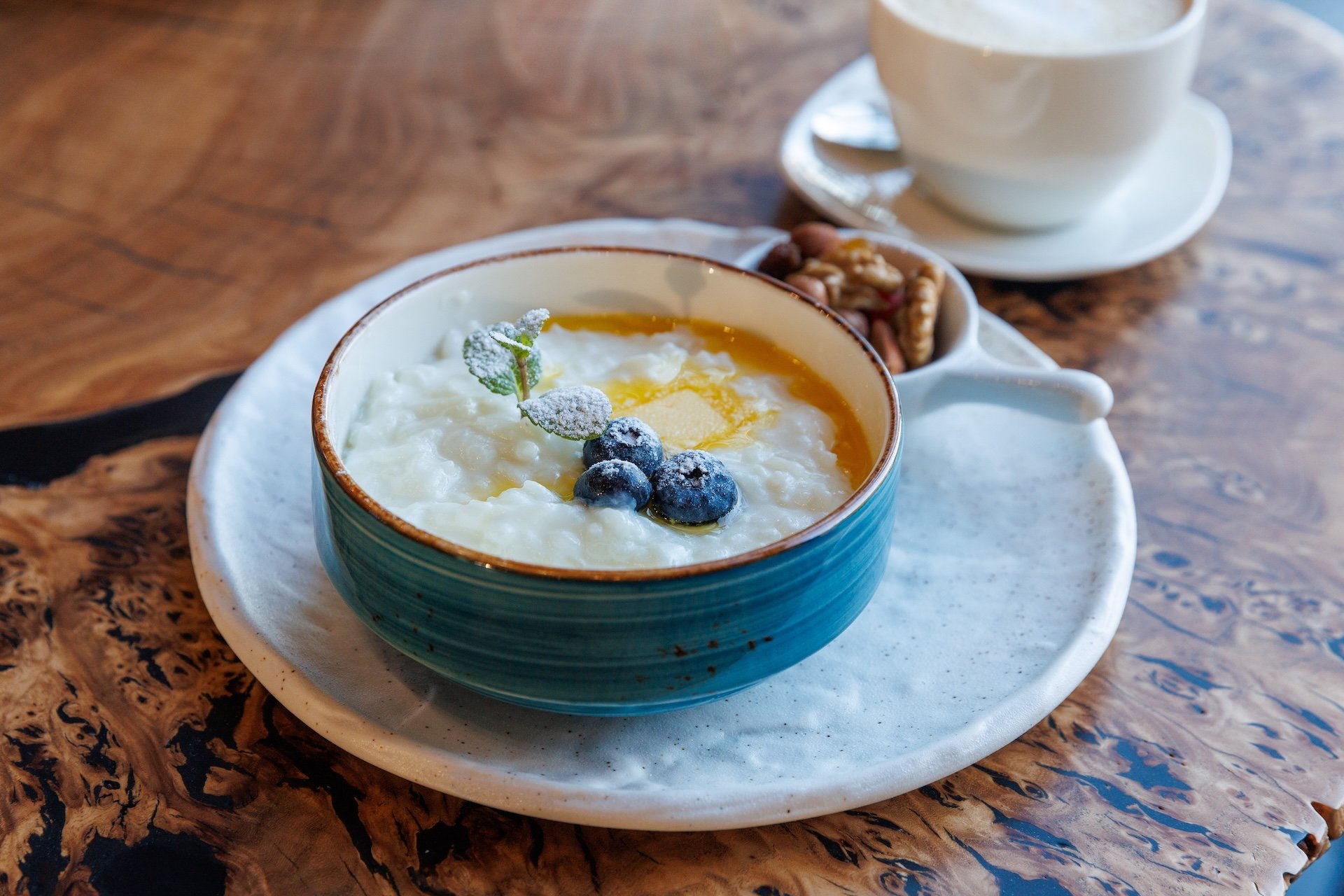

Eat warm, and skip the ice. Your digestion works like a cooking pot, and cold food and iced drinks put out the flame. Start the day with something cooked and warm, like congee, oatmeal, eggs, or soup, and drink water at room temperature or warm. This single change benefits more people than almost anything else I recommend.
Stop eating at about 70 to 80% full. Chinese grandmothers say qī fēn bǎo (七分飽), “seventy percent full.” The Okinawan version, hara hachi bu, is part of the eating pattern studied in one of the world’s longest-lived populations.[6] Leave the table satisfied, not stuffed—no counting required.
Walk after meals. There’s an old saying: “A hundred steps after eating, and you’ll live to ninety-nine” (飯後百步走,活到九十九). The research agrees: even light walking after sitting improves blood sugar and insulin response.[7] Ten to fifteen easy minutes after dinner is enough.
Be in bed before 11. On the Chinese clock, 11 p.m. to 3 a.m. belongs to the Gallbladder and Liver, the hours when blood returns to the Liver to be restored. Modern data point to the same way: keeping a regular sleep schedule predicts lower mortality even better than total sleep hours do.[8]
Let the seasons set your pace. The Neijing is surprisingly practical about this. In winter, it says, go to bed early and don’t get up until the sun does.[4] Most of my patients have never been given that permission. We live like it’s July all year: same hours, same workouts, same to-do list in January as in June. Then February flattens us. When the days become shorter, sleep a little more, make more soups and stews, and swap the spin class for a long walk. Winter is when the body stocks up for spring.
Where acupuncture and herbs come in
Chinese medicine isn’t a weight-loss program, and I won’t pretend it is. What it does well is address what keeps people stuck: sluggish digestion, poor sleep, hormonal swings, stress that lives in the body, and cravings that come from depletion rather than a lack of willpower.
Acupuncture helps the nervous system come down out of high alert. Herbal medicine supports your constitution, because a formula is built for your pattern: warming for the yang-deficient, cooling and moistening for the yin-deficient, drying and moving for the phlegm-damp. The same herbs would be wrong for a different person, which is exactly the point. When the system is more balanced, eating well and moving your body stop feeling like a war.
Maxxing asks you to push harder against your own body. Yǎngshēng asks you to understand it well enough that you can stop fighting it.
Work with me
I offer herbal medicine consultations by telehealth year-round, so you don’t need to live nearby to find out your constitution and get a formula built for it. [Book a discovery call] and we’ll figure out what balanced looks like for you.
Sources
Tomiyama AJ, Carr D, Granberg EM, et al. How and why weight stigma drives the obesity “epidemic” and harms health. BMC Medicine. 2018;16:123.
Tomiyama AJ, Hunger JM, Nguyen-Cuu J, Wells C. Misclassification of cardiometabolic health when using body mass index categories in NHANES 2005–2012. International Journal of Obesity. 2016;40(5):883–886.
Wang Q. Classification and diagnosis basis of nine basic constitutions in Chinese medicine. Journal of Beijing University of Traditional Chinese Medicine. 2005;28(4):1–8. See also China Association of Chinese Medicine, Classification and Determination of Constitution in TCM (ZYYXH/T157-2009).
Unschuld PU, Tessenow H. Huang Di Nei Jing Su Wen: An Annotated Translation of Huang Di’s Inner Classic – Basic Questions. University of California Press; 2011. Chapter 1 (上古天真論) and Chapter 2 (四氣調神大論).
Epel ES, McEwen B, Seeman T, et al. Stress and body shape: stress-induced cortisol secretion is consistently greater among women with central fat. Psychosomatic Medicine. 2000;62(5):623–632.
Willcox BJ, Willcox DC, Todoriki H, et al. Caloric restriction, the traditional Okinawan diet, and healthy aging. Annals of the New York Academy of Sciences. 2007;1114:434–455.
Buffey AJ, Herring MP, Langley CK, Donnelly AE, Carson BP. The acute effects of interrupting prolonged sitting time in adults with standing and light-intensity walking on biomarkers of cardiometabolic health in adults: a systematic review and meta-analysis. Sports Medicine. 2022;52(8):1765–1787.
Windred DP, Burns AC, Lane JM, et al. Sleep regularity is a stronger predictor of mortality risk than sleep duration: a prospective cohort study. Sleep. 2024;47(1):zsad253.
