
A simple guide to Iron-Rich Foods and How to Absorb Them Well
chia nettles
Updated October 2026: plant-based guidance expanded, food values revised, and new sections on testing, supplements, and Chinese medicine.
Low iron is one of the most common findings in my practice, and one of the most often overlooked. In 43 years of clinical work, I have seen it behind persistent fatigue, poor concentration, hair loss, cold hands and feet, heavy and exhausting periods, and the depletion many women feel while trying to conceive or after giving birth. Very often, these patients have been told their bloodwork is normal. A closer look at their iron stores tells a different story.
Iron is essential for carrying oxygen. It sits at the center of hemoglobin, the molecule in red blood cells that picks up oxygen in the lungs and delivers it to every tissue in the body. When iron runs low, energy, cognition, mood, and resilience all suffer.
Many of my patients are vegetarian, vegan, or pescatarian, and many have been told that a plant-based diet cannot provide enough iron. That is not the case. A well-planned plant-based diet can fully meet your iron needs. It takes knowledge and intention, and this guide is meant to provide both.
Why iron runs low
Iron deficiency usually has one or more of these causes:
Blood loss. Heavy menstrual bleeding is the most common cause I see in women before menopause. Pregnancy, the postpartum period, frequent blood donation, and endurance training also draw down iron stores.
Low intake. Any diet that is not planned with iron in mind can fall short, whether or not it includes meat.
Poor absorption. Celiac disease, Crohn's disease and ulcerative colitis, H. pylori infection, gastric bypass surgery and low stomach acid all interfere with iron absorption.
Medications. Acid-reducing medications (proton pump inhibitors such as omeprazole and antacids) reduce iron absorption, as do calcium supplements taken with meals.
Chronic inflammation. Long-running conditions such as autoimmune disease, chronic infection, kidney disease, and obesity raise a hormone called hepcidin. Hepcidin locks iron away in storage and slows absorption from the gut, so the iron is in your body, but your bone marrow cannot use it to make red blood cells. This is called anemia of inflammation, which is why iron supplements often don't help until the underlying inflammation is treated.
But you don't have to be frankly anemic to have symptoms: One of the earliest signs of low-normal iron is cold hands and feet. I've often flagged this in my practice and make food recommendations based on it.
An important note: iron deficiency in men, or in women after menopause, always warrants a medical evaluation to find the cause. Without menstrual bleeding to explain it, slow blood loss from the digestive tract needs to be ruled out. Please don't just take a supplement and move on.
Iron deficiency is not the same as anemia.
These terms are often used interchangeably, but they describe different stages. Iron deficiency means your iron stores are depleted. Anemia means your hemoglobin has fallen below normal. Anemia is a late stage. It is common to be iron deficient for months or even years before the blood count changes, and to feel the effects throughout that time while being told your results are normal.
Signs to watch for
Fatigue that does not improve with rest
Pallor of the skin, lips, or inner lower eyelids
Shortness of breath or a racing heart with exertion
Dizziness or lightheadedness, especially on standing
Cold hands and feet
Hair shedding, and brittle or spoon-shaped nails
Headaches
Poor concentration, mental fog or low mood
Restless legs, particularly at night
Cravings for ice, earth, clay or starch, a pattern known as pica. Craving ice is especially characteristic of iron deficiency.
None of these signs is specific to iron, and each can have other causes. If several are familiar, testing is worthwhile.
Ask for the right tests.
A complete blood count (CBC) identifies anemia but does not measure iron stores. Ask your doctor for a ferritin level, which reflects stored iron, and ideally a full iron panel (serum iron, total iron-binding capacity and transferrin saturation).
Many laboratories flag ferritin as low only below 12–15 ng/mL. Many clinicians, myself included, regard a ferritin below about 30 ng/mL as a sign of depleted stores, even when it falls within the laboratory's reference range. Ferritin also rises with inflammation, so it can appear adequate when stores are actually low. The full iron panel helps clarify the picture.
The two forms of dietary iron
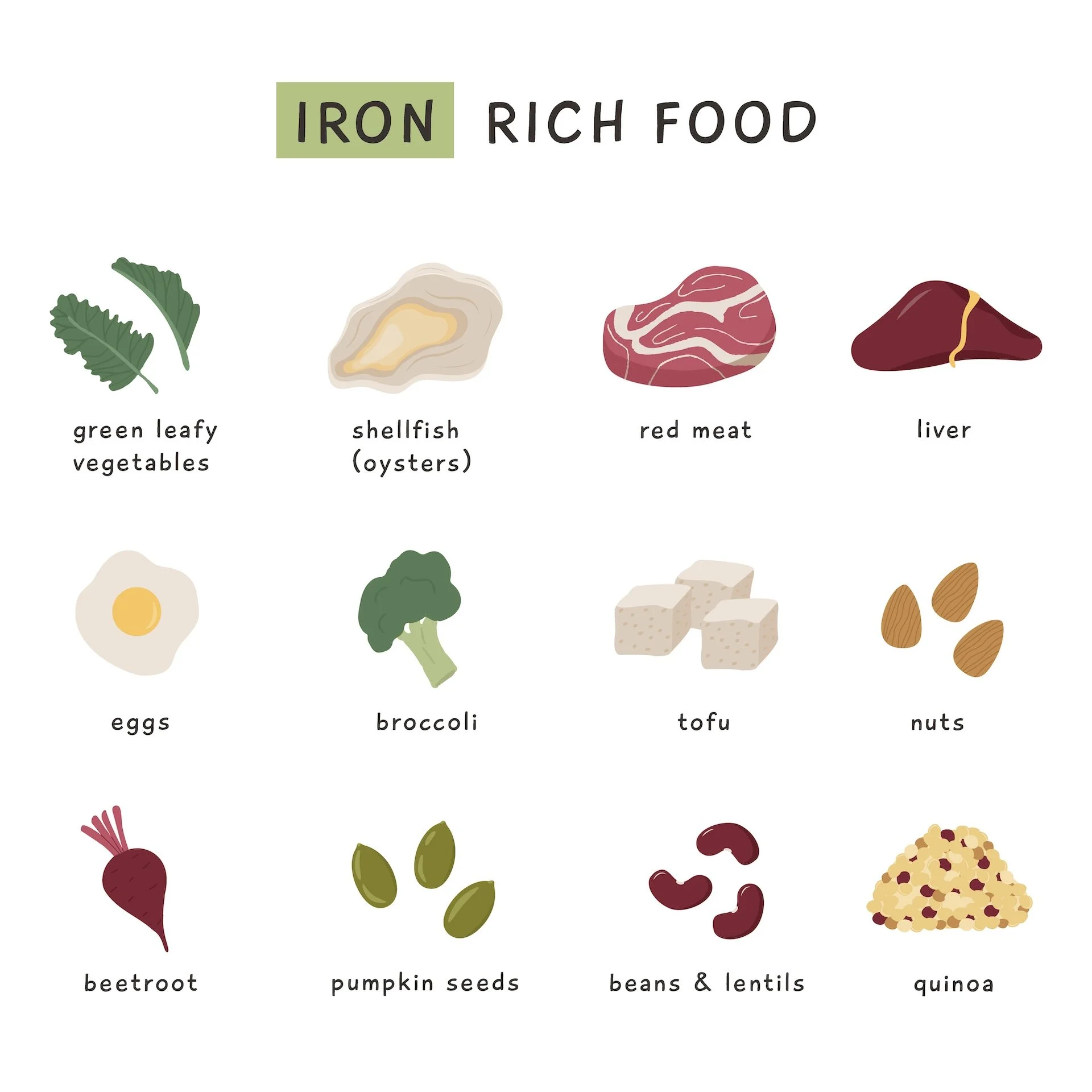
Heme ironNon-heme iron
Found in Meat, poultry, fish and shellfish Legumes, greens, seeds, grains, tofu, dried fruit and fortified foods (also present in meat)
Absorption About 15–35% About 2–20%
Influenced by other foods in the meal? Very little Significantly, in both directions
For those eating a plant-based diet, the wide absorption range of non-heme iron is an opportunity. The foods you eat alongside your iron sources can move absorption from the low end of that range toward the high end. The body also increases absorption when stores are low.
Because of the difference in absorption, the National Institutes of Health suggests that vegetarians aim for about 1.8 times the standard recommended intake. In practice, this means including iron-rich foods at every meal and pairing them thoughtfully, as described below.
Plant sources of iron
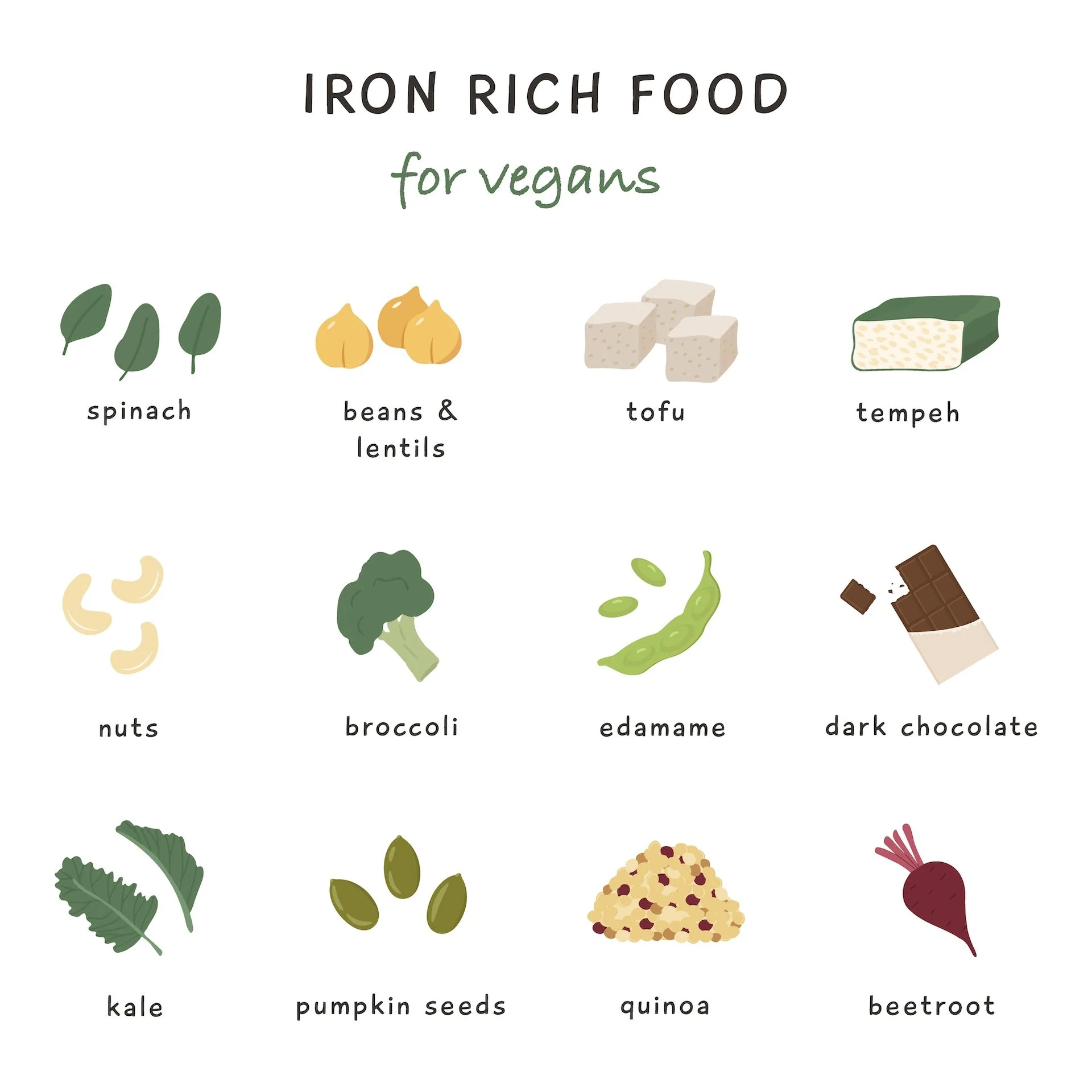
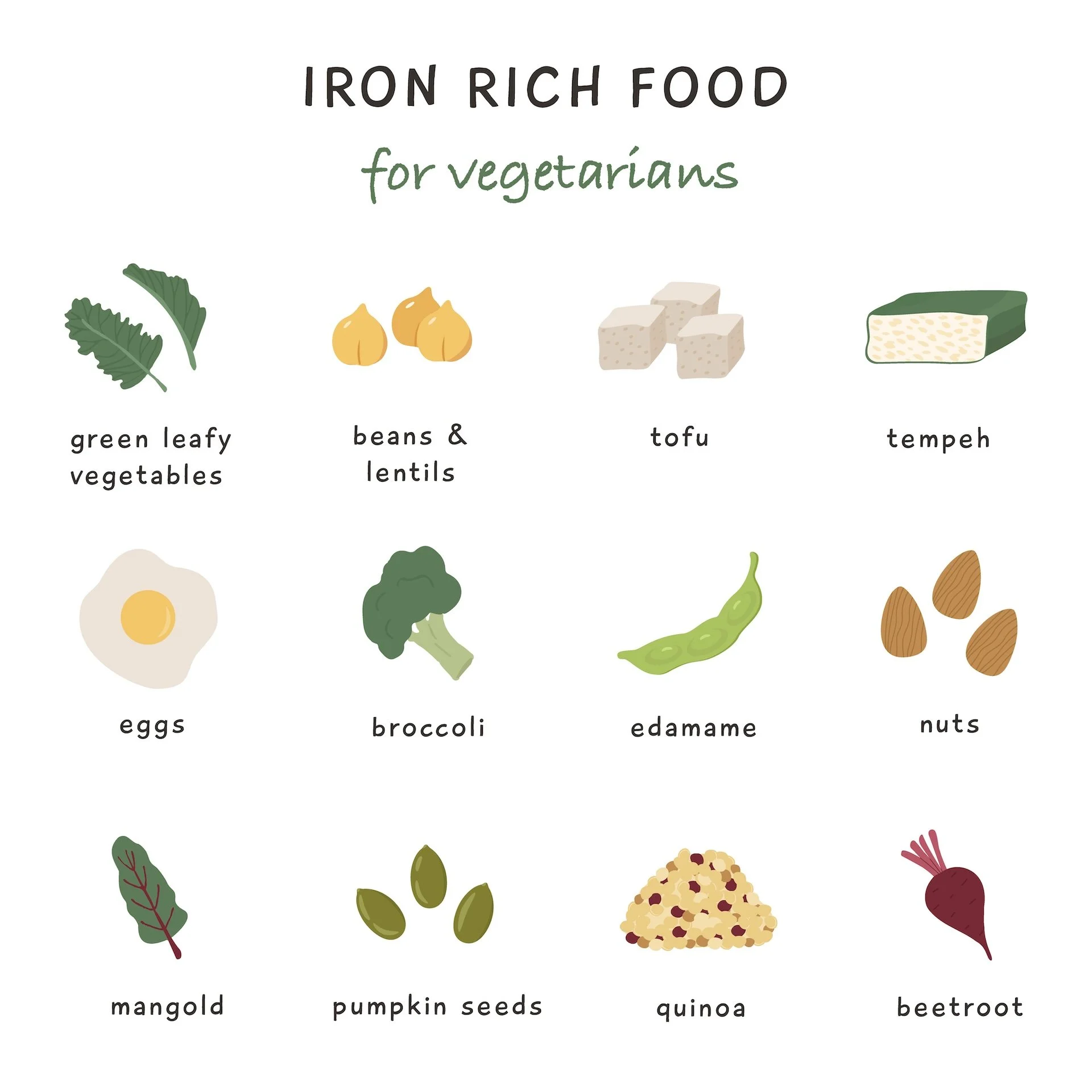
These are the foods I build my vegetarian and vegan patients' meals around.
Legumes
Lentils: about 6.6 mg per cooked cup
White beans: about 8 mg per cup (canned)
Chickpeas, kidney beans and black beans: about 4 mg per cooked cup
Tempeh: about 4 mg per cup. Fermentation makes its iron more available.
Tofu: about 3 mg per ½ cup (firm). Calcium-set tofu is also an excellent calcium source, though calcium competes modestly with iron at the same meal.
Seeds and nuts
Pumpkin seeds: about 2.5 mg per ounce
Hemp seeds: about 2.4 mg per 3 tablespoons
Chia seeds: about 2.2 mg per ounce (2 tablespoons), along with healthy fats and calcium. I include them in my own bone-building plan.
Tahini: about 2.7 mg per 2 tablespoons
Cashews: about 2 mg per ounce
Leafy greens
Cooked spinach: about 6.4 mg per cup. Spinach also contains oxalates, which bind some of its iron, so it should not be your only source. Swiss chard, beet greens and collards are valuable additions.
Greens provide far more iron cooked than raw, because cooking concentrates a large volume of leaves into a small serving.
Whole grains
Amaranth: about 5 mg per cooked cup
Quinoa: about 2.8 mg per cooked cup
Oats: about 2 mg per cooked cup, more if fortified
Fortified breakfast cereals can provide a quarter to all of the daily requirement in a single serving. Check the label.
Other valuable sources
Blackstrap molasses: about 3.6 mg per tablespoon. It can be stirred into oatmeal, baked beans, or a warm drink.
Dark chocolate and cacao: 3 ounces of 45–69% dark chocolate provides about 7 mg.
Dried apricots, raisins and prunes: modest amounts of iron, easily added to meals. Prunes also help relieve the constipation that iron supplements can cause.
Seaweed: spirulina provides about 2 mg per tablespoon, and nori and dulse contribute smaller amounts. I have written about seaweed and fertility here.
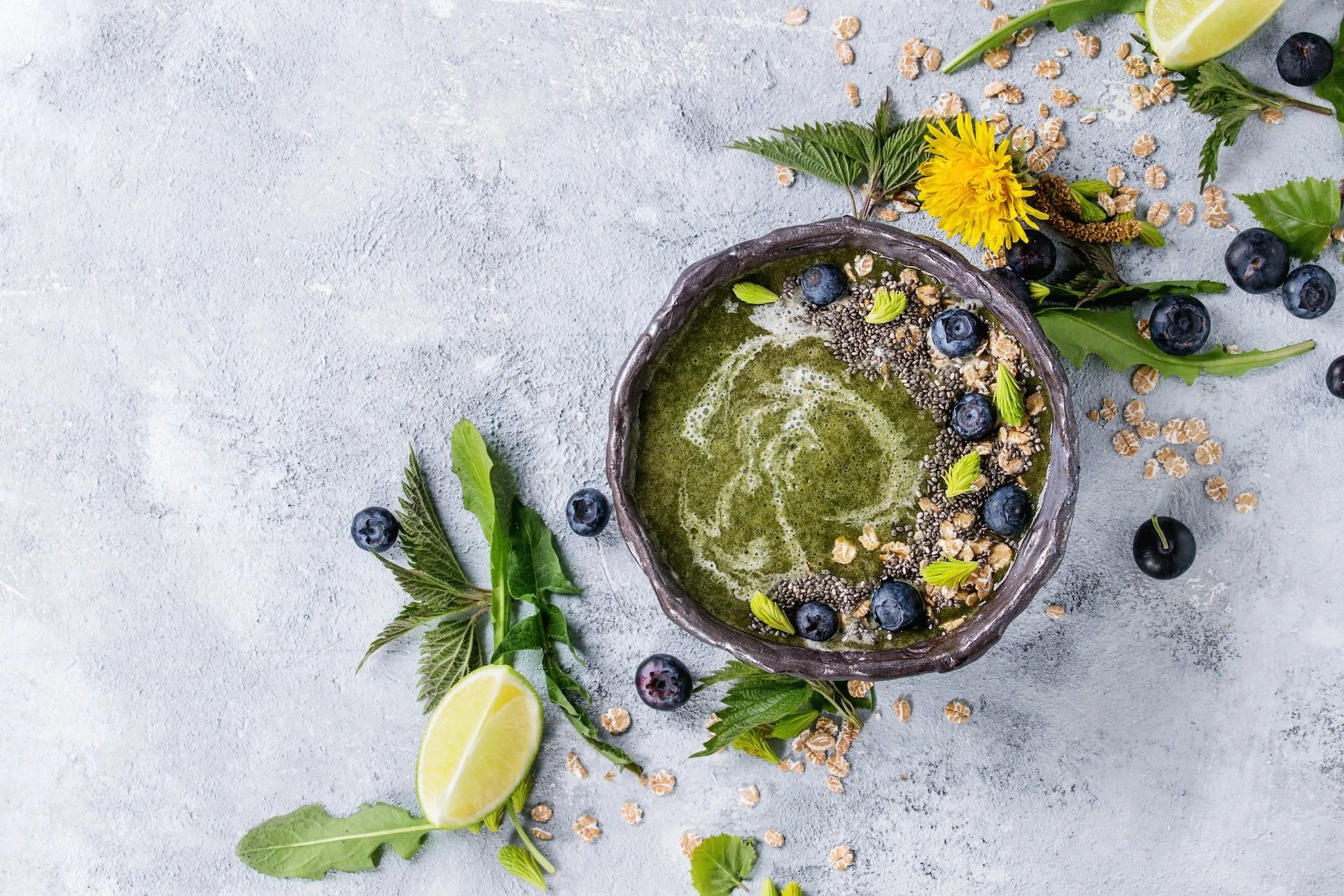
Nettles: cooked nettle greens are a good source of iron, and herbalists have long used nettle to support the blood. Nettle tea provides some minerals, and a long overnight infusion of the dried leaf is considerably stronger. It is best understood as a supporting food rather than a primary source.
For vegetarians who eat eggs and dairy: eggs contribute some iron (about 0.9 mg per egg), but egg yolk also contains a compound that inhibits absorption. Dairy is a poor source of iron, and its calcium competes with iron for absorption. Both have a place in a healthy diet, but neither should be relied on for iron, and dairy is best kept separate from iron-focused meals.
Animal sources of iron
For omnivores and pescatarians:
Oysters: about 8 mg per 3 ounces cooked
Mussels: about 5.7 mg per 3 ounces cooked
Beef or chicken liver: about 5–11 mg per 3 ounces. Liver is a traditional blood-building food in nearly every culinary tradition, including Chinese medicine.
Beef and lamb: about 2–3 mg per 3 ounces
Sardines: about 2 mg per 3 ounces
Chicken or turkey: about 1 mg per 3 ounces, with more in dark meat than white
A note on clams: many iron charts, including an earlier version of this post, list clams at more than 20 mg per serving. Published values for clams are inconsistent, and the higher figures are not well supported, so I no longer include them.
For pescatarians and flexitarians, eating even a small portion of fish or meat at the same meal increases absorption of the non-heme iron in the plant foods on the plate.
How to absorb more iron
This section applies to everyone, and it is where plant-based eaters can make the greatest difference.
Habits that improve absorption
Pair iron-rich foods with vitamin C. This is the most effective single step. Vitamin C can increase non-heme iron absorption several-fold. Add lemon to lentils, red peppers or tomatoes to beans, strawberries or kiwi to fortified cereal, and broccoli or cabbage to a tofu stir-fry.
Cook in cast iron. Simmering acidic foods such as tomato sauce, chili or dal in a cast iron pot measurably increases their iron content.
Soak, sprout and ferment. Phytates in beans, grains, nuts and seeds bind iron. Soaking beans overnight, sprouting lentils, choosing sourdough bread, and eating tempeh and miso all reduce phytates.
Include onions and garlic. Research suggests they modestly improve iron absorption from grains and legumes.
Factors that reduce absorption
Tea and coffee with meals. Their tannins and polyphenols can reduce iron absorption by more than half. You don't need to give them up; drink them at least an hour before or after iron-rich meals.
Calcium at the same meal. Take calcium supplements and eat larger servings of dairy at a different time than iron-rich meals. See my post on dairy-free calcium-rich foods.
Acid-reducing medications. If you take a proton pump inhibitor long term and your iron remains low, discuss this with your doctor.
A sample plant-based day
Breakfast: Oatmeal with a tablespoon of blackstrap molasses, pumpkin seeds, and chia, topped with strawberries. Coffee an hour later.
Lunch: Lentil soup simmered with tomatoes in a cast iron pot and finished with lemon, with sourdough bread.
Snack: Dried apricots and a square of dark chocolate.
Dinner: Tempeh and broccoli stir-fried with red pepper, garlic, and sesame seeds, served over quinoa.
This day provides well over 30 mg of iron, paired in ways that support absorption.
How much iron do you need?
The NIH recommended daily intakes for adults are:
Standard Vegetarian/vegan (×1.8)
Men 19+ 8 mg about 14 mg
Women 19–50 18 mg about 32 mg
Women 51+ 8 mg about 14 mg
Pregnancy 27 mg about 49 mg
The vegetarian figures are estimates and assume a diet with few absorption enhancers. Pairing iron-rich foods with vitamin C and keeping tea and coffee away from meals can improve absorption beyond these assumptions. Pregnancy is the one stage at which diet alone frequently falls short, regardless of eating pattern, and supplementation should be discussed with your midwife or physician.
A Chinese medicine perspective: nourishing Blood
In Chinese medicine, many patients with low iron are described as having Blood deficiency: a pale complexion and nails, dizziness, dry skin and hair, poor sleep, scanty or delayed periods, anxiety, and a sense of depletion. Blood deficiency and iron deficiency overlap considerably, but they are not identical, and the distinction is clinically useful.
However, anemia can also present with symptoms of Qi Deficiency: Fatigue, shortness of breath, and feeling cold.
In Chinese medicine, the Spleen and Stomach produce Blood from food. When a patient is Blood deficient, I consider not only what they eat but how well they digest it. Bloating, loose stools, fatigue after meals, and poor appetite indicate that the Spleen needs support before additional iron can be used well. This corresponds closely to the Western understanding that impaired absorption is a major cause of iron deficiency.
Foods traditionally used to nourish Blood include many of the iron sources above, along with several classics:
Black sesame seeds (黑芝麻 hēi zhī ma)
Goji berries (枸杞子 gǒu qǐ zǐ)
Red dates / jujubes (大枣 dà zǎo)
Longan fruit (龙眼肉 lóng yǎn ròu)
Beets, dark leafy greens, black beans and adzuki beans
Bone broth and Liver, for those who eat animal foods
Chinese herbal medicine does not replace iron when a true deficiency is present. Its strength lies in addressing the underlying causes: regulating heavy menstrual bleeding, strengthening digestion so that nutrients are absorbed, and supporting recovery after childbirth, illness, or prolonged depletion. Formulas such as Dang Gui Bu Xue Tang (Tangkuei Decoction to Tonify the Blood) and Gui Pi Tang (Restore the Spleen Decoction) are among those I use frequently, always tailored to the individual. I offer this care in person in Philadelphia and by telehealth.
Myths, half-truths and open questions
A good deal of folklore surrounds iron. These are the questions my patients ask most often.
"Vegetarians and vegans are always iron deficient." This is not true. Studies find that vegetarians tend to have lower iron stores (ferritin) than meat eaters, but rates of anemia are similar. Many meat eaters are iron deficient as well, particularly women with heavy periods. How a diet is constructed, and what is happening in the body, matters more than the label.
"Lower iron stores are always a problem." This remains an open question. Some research links high body iron stores to insulin resistance and other metabolic problems, and heme iron from red and processed meat is one proposed reason those foods are associated with colorectal cancer risk. A vegetarian with ferritin in the healthy but modest range may be in a very good position. The goal is sufficient iron, not the maximum possible.
"Spinach is the best source of iron." This is only partly true. Spinach contains a respectable amount of iron, but its oxalates bind much of it. (The popular story that Popeye's spinach came from a misplaced decimal point is itself a myth.) Lentils, white beans, tofu and pumpkin seeds are more dependable sources.
"What is a normal ferritin?" There is genuine disagreement. Many laboratory ranges consider anything above 12–15 ng/mL normal. Many clinicians use 30 ng/mL, and the American Gastroenterological Association uses 45 ng/mL when evaluating iron deficiency in patients with anemia. If you have symptoms and a ferritin in the teens or twenties, it is worth raising with your doctor.
"Food-based iron is absorbed better than supplements." This is largely a marketing claim. Liquid formulas such as Floradix are gentle and well tolerated, which is why I often recommend them. Still, they contain a standard form of iron (ferrous gluconate). They are gentler mainly because the dose is lower, which also means they work more slowly.
"Daily iron is best." The research is evolving. A daily dose of iron raises hepcidin, which then reduces absorption of the following dose. For this reason, alternate-day dosing is gaining support. Studies differ on the size of the benefit. Still, it is a reasonable approach, particularly for those whose stomachs are upset by daily iron.
"Blood-building herbs raise iron." Not directly. Dang Gui, Shu Di Huang, and the other classical Blood tonics do not contain meaningful amounts of iron. Their benefit comes from improving digestion, regulating heavy bleeding, and supporting recovery. That benefit is real and important, but a patient with a ferritin of 8 also needs iron.
"Nettle tea will correct a deficiency." Nettle is a valuable, mineral-rich herb, but a cup of tea carries little iron, and tea alone is not sufficient to correct a true deficiency. Nettle is best used alongside, not instead of, iron-rich foods.
About iron supplements
When iron stores are very low, food alone may not restore them quickly enough, and supplementation is usually the most direct route. These are the principles I share with patients:
Test before supplementing. Do not take iron without knowing your levels. Excess iron is harmful, and some people carry a genetic tendency to accumulate it (hemochromatosis).
Consider alternate-day dosing. Research shows that taking iron every other day can improve absorption and may reduce side effects.
Take iron with vitamin C, and away from coffee, tea, calcium, and dairy.
Choose a gentle form if needed. Iron is commonly constipating. Iron bisglycinate tends to be easier on digestion, and liquid formulas such as Floradix (vegetarian) are lower-dose and well tolerated. A few prunes daily can also help.
If you have Crohn's disease or ulcerative colitis, oral iron can aggravate digestive symptoms and is often poorly absorbed during active inflammation. Intravenous iron is frequently the better option.
Store iron supplements out of reach of children. Iron overdose can be a cause of poisoning in young children.
In summary
Healthy iron stores can be built on any diet, including a fully plant-based one. Include iron-rich foods at every meal, pair them with vitamin C, keep tea and coffee away from mealtimes, and ask for a ferritin test if you recognize the signs of deficiency. If you are doing all of this and still feel depleted, the underlying cause deserves attention. Heavy periods, weak digestion, and long-term depletion are areas where Chinese medicine has a great deal to offer, and I would be glad to help.
This post is for educational purposes and is not a substitute for individual medical care. Please consult your own practitioner before beginning any supplement.
Sources
National Institutes of Health, Office of Dietary Supplements. Iron: Fact Sheet for Health Professionals.ods.od.nih.gov/factsheets/Iron-HealthProfessional
USDA FoodData Central. fdc.nal.usda.gov (food iron values)
Hurrell, R. & Egli, I. "Iron bioavailability and dietary reference values." American Journal of Clinical Nutrition 91 (2010): 1461S–1467S.
Ko, C.W. et al. "AGA Clinical Practice Guidelines on the Gastrointestinal Evaluation of Iron Deficiency Anemia." Gastroenterology 159 (2020): 1085–1094.
Stoffel, N.U. et al. "Iron absorption from oral iron supplements given on consecutive versus alternate days and as single morning doses versus twice-daily split dosing in iron-depleted women." Lancet Hematology 4 (2017): e524–e533.
Lynch, S.R. & Cook, J.D. "Interaction of vitamin C and iron." Annals of the New York Academy of Sciences 355 (1980): 32–44.
Hurrell, R.F., Reddy, M. & Cook, J.D. "Inhibition of non-haem iron absorption in man by polyphenolic-containing beverages." British Journal of Nutrition 81 (1999): 289–295.
Gautam, S., Platel, K. & Srinivasan, K. "Higher bioaccessibility of iron and zinc from food grains in the presence of garlic and onion." Journal of Agricultural and Food Chemistry 58 (2010): 8426–8429.
Geerligs, P.D. et al. "Food prepared in iron cooking pots as an intervention for reducing iron deficiency anemia in developing countries: a systematic review." Journal of Human Nutrition and Dietetics 16 (2003): 275–281.
Mangels, R. "Iron in the Vegan Diet." The Vegetarian Resource Group. vrg.org/nutrition/iron.php
"Inconsistent values for iron content complicate recommending clams as an iron source." FAO AGRIS. https://agris.fao.org/search/en/records/65dec9660f3e94b9e5d15892
Harvard T.H. Chan School of Public Health. The Nutrition Source: Iron.
Maciocia, G. The Foundations of Chinese Medicine. Elsevier (on Blood deficiency and the Spleen's role in producing Blood).
Bensky, D., Barolet, R. et al. Chinese Herbal Medicine: Formulas & Strategies. Eastland Press (Dang Gui Bu Xue Tang; Gui Pi Tang).
Haider, L.M. et al. "The effect of vegetarian diets on iron status in adults: a systematic review and meta-analysis." Critical Reviews in Food Science and Nutrition 58 (2018): 1359–1374.
Stoffel, N.U. et al. "Iron absorption from supplements is greater with alternate-day than with consecutive-day dosing in iron-deficient anemic women." Haematologica 105 (2020): 1232–1239.
Bastide, N.M., Pierre, F.H. & Corpet, D.E. "Heme iron from meat and risk of colorectal cancer: a meta-analysis and a review of the mechanisms involved." Cancer Prevention Research 4 (2011): 177–184.